The Fish Doorbell: A Glimpse into Crowdsourced Innovation for Fish Passage Through Sluices
For centuries, sluices have been vital arteries of human civilization, enabling navigation, controlling water levels, and shaping landscapes. From the historic canals that once ferried agricultural produce from Plantage Rust en Werk to the bustling port of Paramaribo, to modern flood control systems, these structures are cornerstones of our infrastructure. Yet, while serving humanity, sluices often present formidable barriers for aquatic life, particularly migrating fish. The critical challenge of enabling
vissen door sluis – fish passage through sluices – has long prompted engineers and environmentalists to seek solutions. Enter the Fish Doorbell, a charmingly simple yet profoundly innovative crowdsourced project from the Netherlands, demonstrating how community engagement and technology can create vital pathways for aquatic migration.
The Dual Nature of Sluices: Heritage, Utility, and Obstacle
Sluices, like the one at Plantage Rust en Werk, embody a rich tapestry of history, water management, and cultural significance. These structures regulated essential water flow, supported agriculture, and facilitated trade, becoming integral to the economic and cultural fabric of regions. A visit to such a historical site can stir deep emotions, connecting us to past generations who relied on these waterways for sustenance and livelihood. The image of a person fishing from a sluice, as noted at Plantage Rust en Werk, evokes the timeless adage: "Give someone a fish and they eat for a day; teach them to fish and they eat for every day." This proverb speaks not just to skill, but to sustainable interaction with nature – a principle that resonates deeply with the Fish Doorbell project.
However, from an ecological perspective, these essential structures often fragment aquatic ecosystems. They disrupt the natural migratory routes of fish, which need to move between different habitats for spawning, feeding, and seeking refuge. Without effective passage, fish populations can decline, biodiversity suffers, and entire ecosystems can be thrown out of balance. This is where the core problem of
vissen door sluis becomes apparent: how do we reconcile human needs with the vital needs of aquatic inhabitants? Traditional solutions, like fish ladders, have offered some relief, but they can be expensive, complex, and not always suitable for every location or species.
Unveiling the Fish Doorbell: A Digital Lifeline for Aquatic Migrants
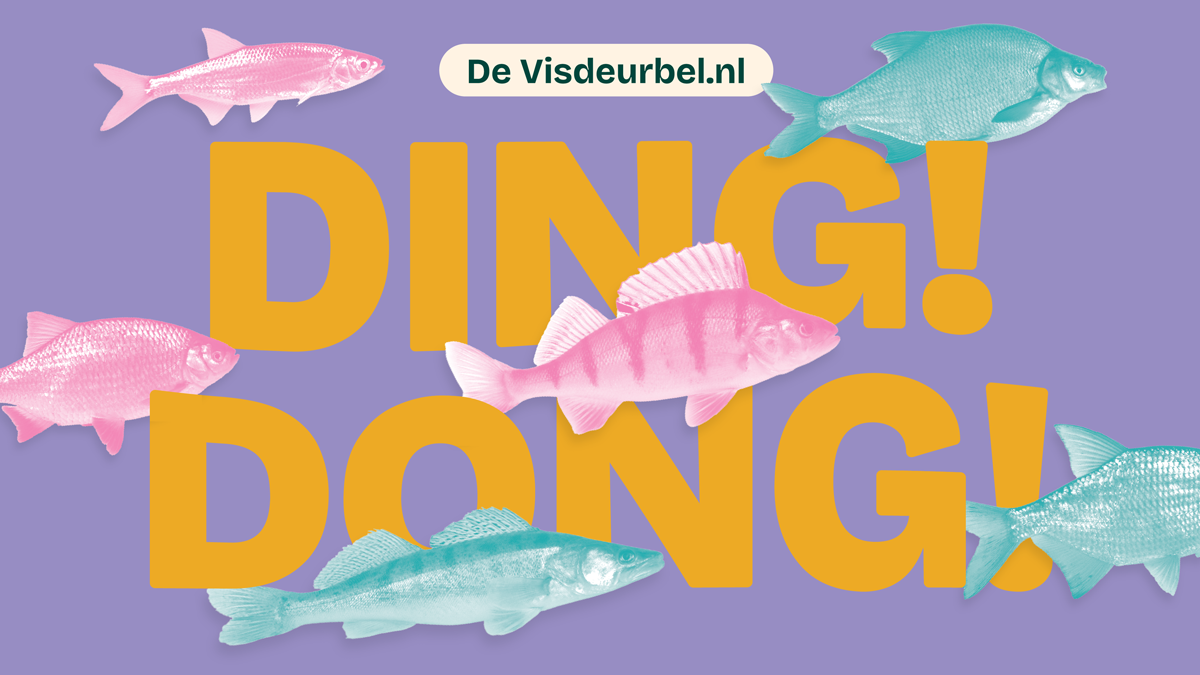
In March 2021, a novel solution blossomed in Utrecht, Netherlands: the Visdeurbel, or Fish Doorbell. Deployed at the Weerdsluis on the historic Oudegracht, this system revolutionizes how we think about fish passage. Instead of a purely mechanical solution, it harnesses the power of crowdsourcing and real-time observation. The concept is elegantly simple: an underwater camera streams live footage of the sluice gate, allowing anyone with an internet connection to watch. When fish are spotted waiting to pass, users can press a "doorbell" button. This action sends a notification to the lock operator, prompting them to open the sluice gate and allow the trapped fish to continue their journey.
The impact was immediate and astounding. In its first two weeks alone, the Utrecht Visdeurbel was "rung" over 23,000 times, highlighting both the sheer volume of fish awaiting passage and the public's eagerness to participate. This surge in engagement demonstrated the project's potential not just as an ecological tool, but as a powerful public awareness campaign. It transforms passive citizens into active environmental stewards, fostering a deeper connection between people and their local waterways. It's a testament to how simple, intuitive technology can empower communities to make a tangible difference in their local environment, directly addressing the challenge of facilitating
vissen door sluis.
Beyond Fish: A Broader Ecological Benefit and Community Engagement
While initially designed for seasonal fish migration, the Fish Doorbell's benefits extend far beyond its finned beneficiaries. The livestream has captured a diverse array of aquatic and semi-aquatic life, including crabs, lobsters, frogs, and even geese, all waiting for passage. This broader ecological scope underscores the system's utility in supporting overall waterway health and biodiversity. It highlights that impediments to one species often affect many others within the same ecosystem.
The genius of the Fish Doorbell lies in its dual function: it's a practical solution for fish passage and a powerful educational tool.
- Direct Environmental Impact: It actively aids migrating species, increasing their survival rates by reducing vulnerability to predation and helping them reach essential habitats.
- Public Awareness and Education: By providing a window into the underwater world, it educates the public about local aquatic biodiversity and the challenges facing migratory species. People learn about different fish species, their behaviors, and the importance of their journeys.
- Community Science: It turns thousands of casual observers into citizen scientists, contributing valuable real-time data on fish presence and movement, which can inform future conservation efforts.
- Engagement and Ownership: The act of pressing the doorbell button fosters a sense of personal responsibility and collective ownership over the health of local waterways. This feeling of direct contribution is a powerful motivator for continued engagement and support for environmental initiatives.
This model of crowdsourced action proves that conservation doesn't always require large-scale, complex engineering projects. Sometimes, it's the ingenious combination of existing technology, community spirit, and a clear purpose that yields the most profound results for enabling
vissen door sluis.
The success of the Fish Doorbell in Utrecht offers a compelling blueprint for other locations facing similar challenges. Its low cost, high engagement, and immediate ecological benefits make it an attractive alternative or complement to traditional fish ladders. While a physical fish ladder provides a continuous passage, the Fish Doorbell offers a dynamic, on-demand solution that can be particularly effective in urban environments or at sluices where a full fish ladder might not be feasible.
One could envision the expansion of such systems globally, adapting the technology to suit various aquatic environments and local species. Imagine a network of "animal doorbells" aiding wildlife passage at different infrastructural pinch points – a pedestrian crossing for hedgehogs, a bridge for monkeys, or indeed, more waterways adopting the Fish Doorbell for
vissen door sluis. Further technological advancements, such as AI-powered fish detection, could potentially automate parts of the process while still retaining a human oversight component for critical decisions and community engagement.
Moreover, the Fish Doorbell concept reminds us that innovation in conservation often lies at the intersection of technology, community, and a deep understanding of ecological needs. It's about bridging the gap between human infrastructure and natural processes, ensuring that our progress doesn't come at the irreversible cost of our planet's biodiversity.
Conclusion
The Fish Doorbell is more than just a clever gadget; it's a symbol of hope for sustainable waterway management and a testament to the power of collective action. By transforming a historical barrier into a point of connection between humans and the underwater world, it effectively tackles the critical issue of
vissen door sluis. It reminds us that heritage, utility, and ecology are not mutually exclusive but intertwined. Just as the sluice at Plantage Rust en Werk played a vital role in its community's past, the Fish Doorbell is shaping a more harmonious future, one where technology and community spirit combine to ensure that all creatures, great and small, can navigate our shared world. Its continued success inspires us to find more creative, inclusive ways to protect and cherish our natural environment, teaching us all how to "fish" for a more sustainable future, day by day.